 NEXUS
Think
Break complex problems into smaller steps. Work through a problem one step at a time.
AI · CODING · ROBOTICS
Nexus Builder Level 1 is a 12-week hands-on program where students learn to code, investigate AI, connect code to hardware and build programmable robotic systems. They move from guided builds toward independent challenges.
Founding Cohort Fee ₹799/month
Includes 2.5-hour Sunday Build Labs and 45-minute midweek online Build Clinics.
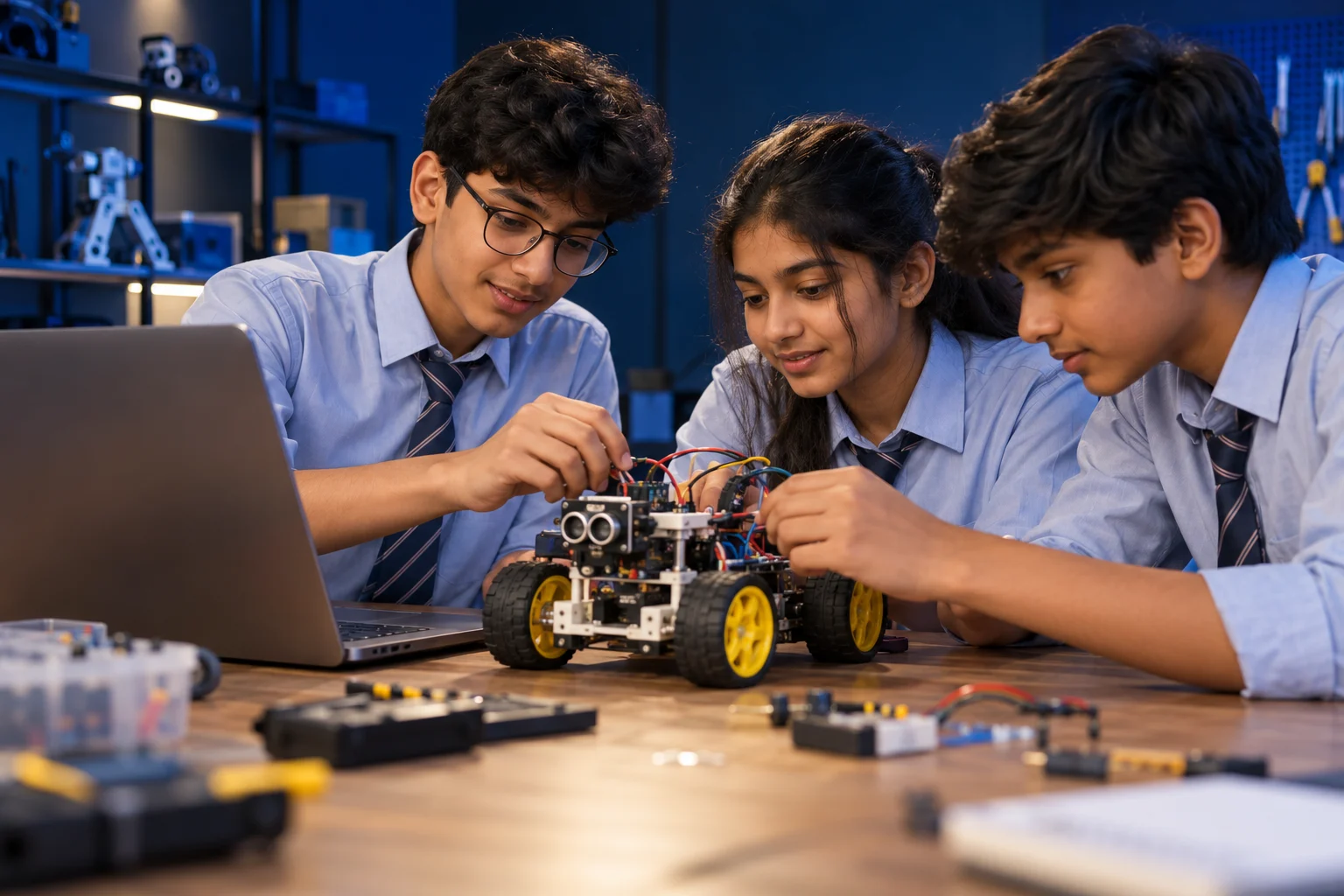 Concept image
Code, sensors
and working robots.
NEXUS BUILDER — LEVEL 1
AI · Coding · Robotics
For beginners and near-beginners in Classes 6–9. No advanced coding experience is needed. Each phase builds on the last: students write and modify code, question AI outputs, connect software to sensors and motors, and improve what they make.
WHY NEXUS
Students question, test, modify and build with it.
Break complex problems into smaller steps. Work through a problem one step at a time.
Turn an idea into a working prototype.
Find what failed and use evidence to improve it.
Combine coding, AI and robotics in increasingly independent projects.
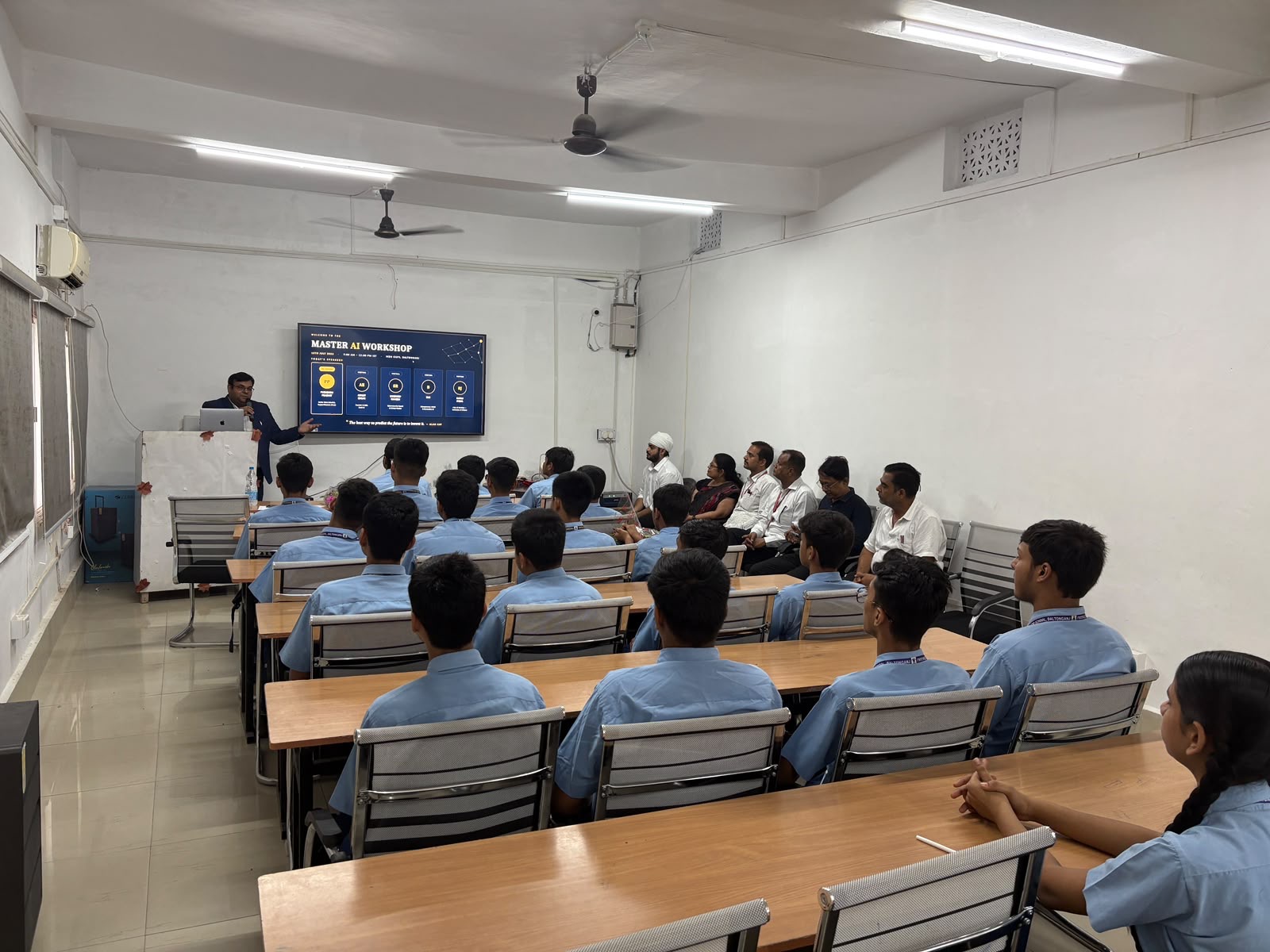
The goal: turn an idea into something that works.
NEXUS BUILDER — LEVEL 1
Code → AI → Physical Computing → Robotics → Create. Students build and test throughout every phase.
WEEKS 1–4 · CODE
Use Python to break problems into steps, write logic and test software that responds to input.
EXAMPLES TO WORK TOWARD
WEEKS 5–6 · AI
Explore how data, models and inputs affect results. Test a small classifier and look for cases where it fails.
EXAMPLES TO WORK TOWARD
WEEKS 7–8 · PHYSICAL
Connect inputs, logic and outputs. Use sensors, signals and movement to make a system respond.
EXAMPLES TO WORK TOWARD
WEEKS 9–11 · ROBOTICS
Combine sensor readings, decisions and motor control. Test movement, calibrate and improve reliability.
EXAMPLES TO WORK TOWARD
WEEK 12 · CREATE
Receive an open brief, plan a solution, build, test and explain what changed along the way.
EXAMPLES TO WORK TOWARD
Activities are adjusted to students’ starting levels and cohort progress.
MADE, NOT MEMORIZED
Examples of projects students can work toward, not completed student work.
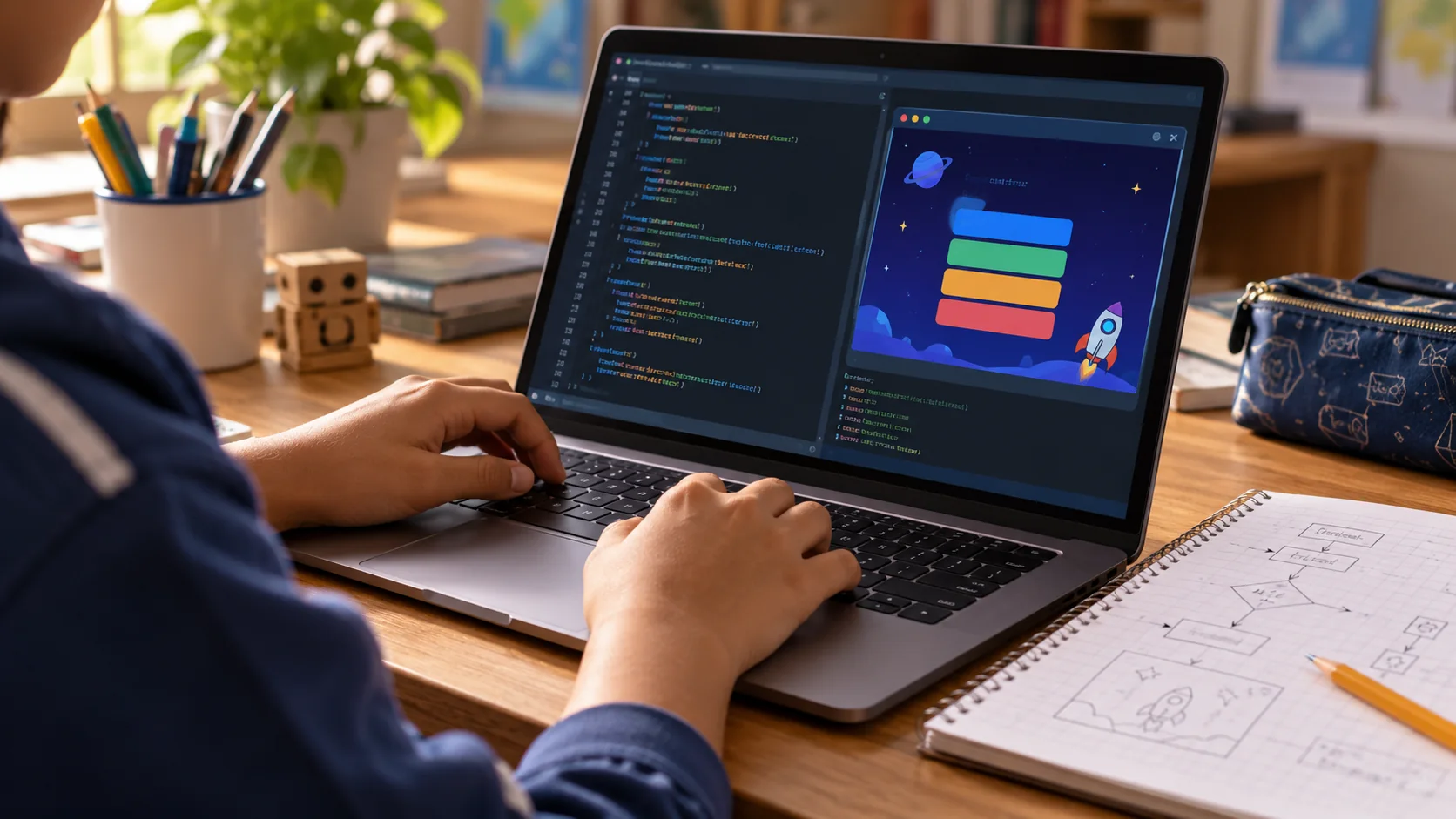 Concept image
Input and logic work together in a decision system, student utility or build sprint.
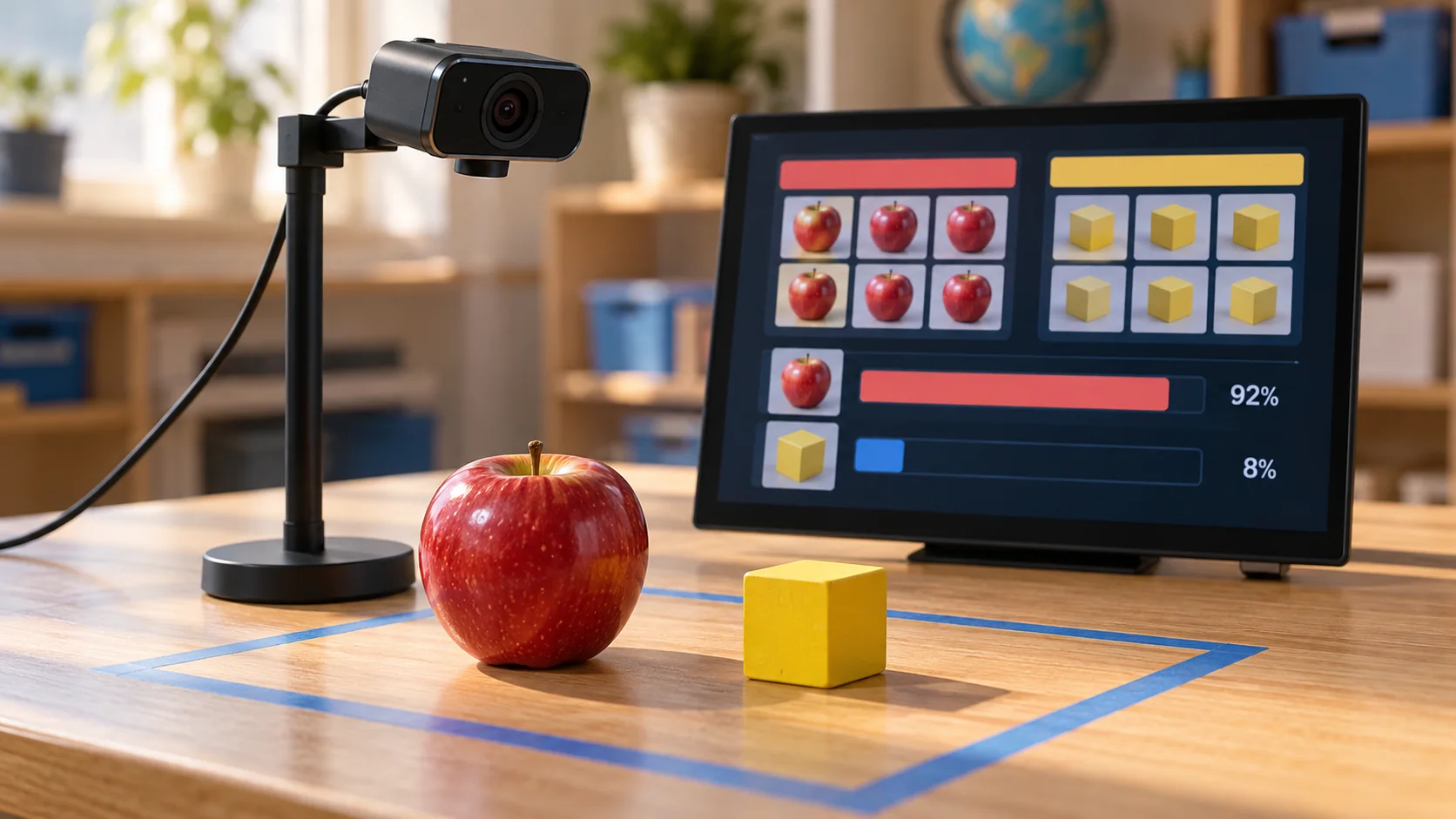 Concept image
Train, test and question a model. Look for failure cases and improve the inputs.
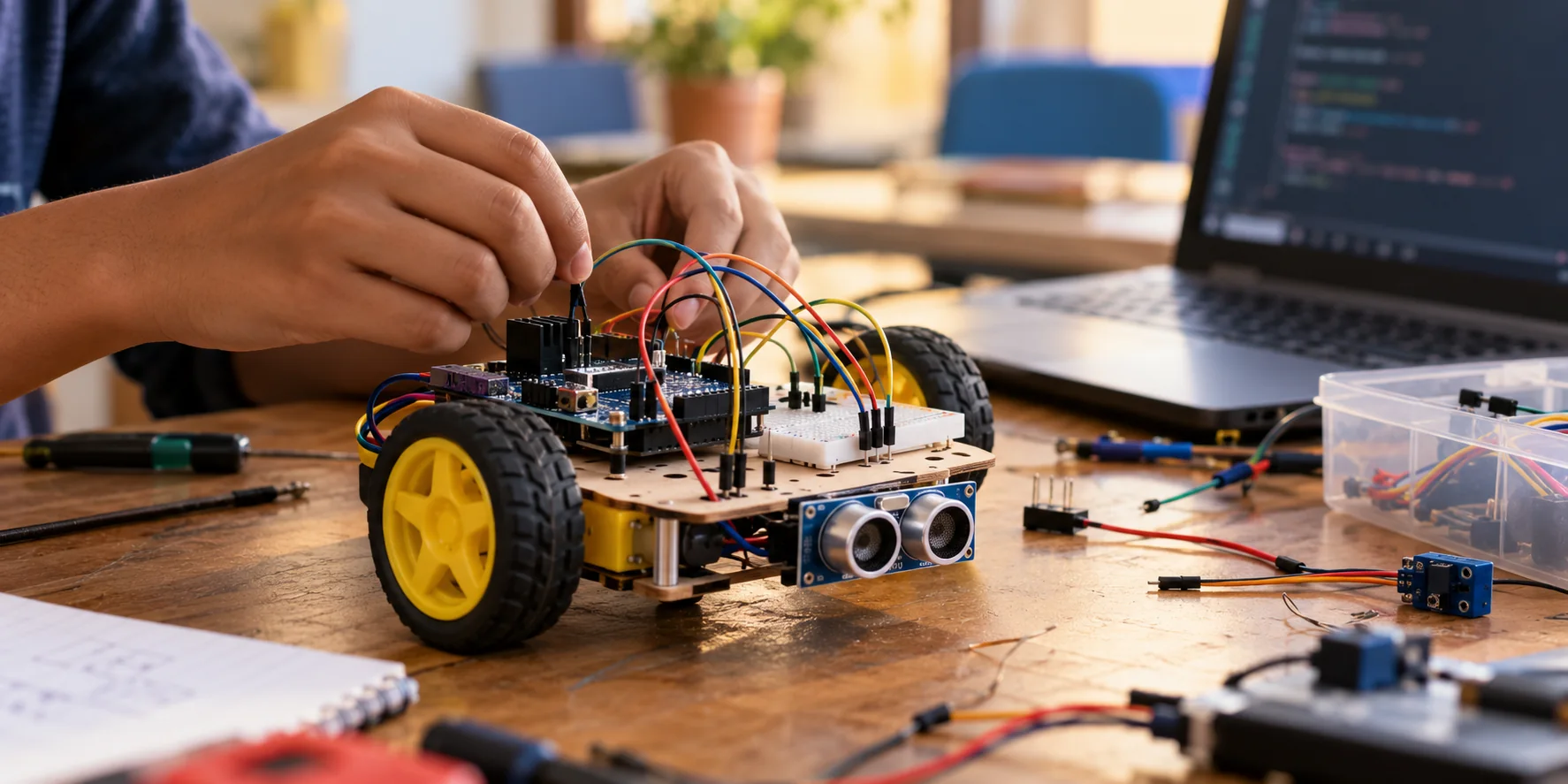
Code connects sensors, light, sound and movement through input → logic → output.
 Concept image
A sensor-driven system makes programmed decisions and moves.
WEEK 12 · NEXUS BUILD DAY
An open brief: students decide how to solve it, test their choices and explain what changed.
Project complexity varies according to student experience, cohort progress and available modules. These are possible examples, not completed student work.
THE SUNDAY BUILD LAB
Every Sunday is a 2.5-hour Build Lab. The intended balance is roughly 25% concepts and 75% hands-on building. Students follow a guided build, modify its behaviour, then take on a challenge with less direction.
The instructor introduces one idea with a short demonstration, then students put it to work.
LEARN → BUILD → TEST → DEBUG → IMPROVE Intended session format; time varies with the activity.
Instructor support gradually decreases. Students ask: What did we expect? What happened? What failed? What did we change? What would we try next?
THE WEEKLY FORMAT
New concepts, live demonstrations, guided builds, hardware, testing and collaboration.
Revision, questions, debugging and small challenges. No major required new concepts are introduced here.
30 hours of core offline learning, plus up to 9 hours of online support across 12 weeks.
THE BIGGER PICTURE
Code gives instructions. Students learn how to tell a system what to do.
AI interprets information. Explore useful predictions and responses, with responsible use.
Hardware makes it physical. Sensors, motors and machines bring ideas into the real world.
Students bring these skills together as their projects grow.
THE BUILDER MINDSET
Programming languages will change. Technology will change. AI tools will change.
The ability to understand a problem, experiment and build something useful remains valuable.
SMALL BY DESIGN
Students gradually move from guided builds toward increasingly independent challenges.
HOW WE LOOK AT PROGRESS
We look at practical progress: understanding the idea, building and testing a system, finding errors, modifying behaviour, explaining decisions and needing less help over time. This is a learning framework, not a student ranking.
WHAT COMES LATER
Web development, JavaScript and advanced robotics are possible pathways for later Nexus levels. They are not part of this 12-week Level 1 cohort.
WHAT DOES YOUR CHILD LEAVE NEXUS ABLE TO DO?
At Nexus, we don’t want students to leave knowing a list of programming languages. We want them to leave knowing how to turn an idea into something that works.
NEXUS BUILDER — LEVEL 1
Register your interest and we’ll contact you with the enrollment details. No payment or enrollment commitment at this stage.
GOOD QUESTIONS
Answers about the first cohort, classes and enrollment.
🇹🇭 As Nexus grows, selected students may have opportunities to join future technology camps and learning experiences in Thailand.
Future selective opportunity; not confirmed or included in the cohort fee. Separate terms apply.
THE FIRST NEXUS COHORT
AI · Coding · Robotics / Classes 6–9
MDN GGPS, Daltonganj
Small batches. Limited seats.